As Western management models falter under the weight of disengagement, burnout, and performative inclusion, a 1,500-year-old African philosophy is offering multinational corporations a radical—and remarkably effective—alternative.
By Times of Fortune Editorial Team
"I am because we are."
Four words. One philosophy. A revolution in the making.
In an era when global employee engagement hovers at a dismal 23 percent according to Gallup's 2024 State of the Global Workplace report, when burnout has been officially classified as an occupational phenomenon by the World Health Organization, and when the Great Resignation has morphed into what workplace psychologists now call the Great Disillusionment, corporations across the world are scrambling for answers. They are investing billions in wellness apps, ping-pong tables, and DEI workshops. They are hiring Chief Happiness Officers and redesigning open-plan offices. Yet the numbers refuse to move.
Meanwhile, quietly and persistently, an ancient African philosophy is proving that the answer was never about perks, programs, or policies. It was about people.
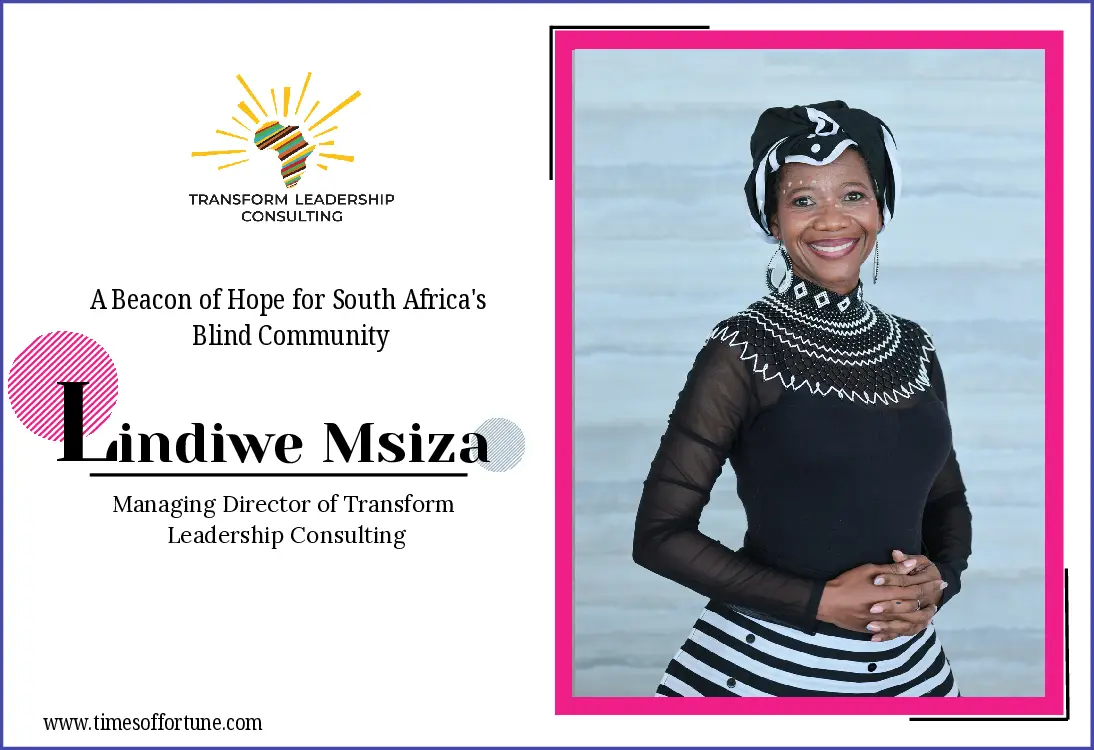
Ubuntu—a Nguni Bantu term most commonly translated as "I am because we are"—is emerging as one of the most compelling leadership frameworks of the 21st century. And practitioners like Lindiwe Msiza, the South African transformational consultant featured on this month's cover, are proving that it works not just in theory but in the most demanding corporate environments on earth: unionized mining operations, government revenue services, multinational boardrooms, and cross-continental partnerships.
But what exactly is Ubuntu, and why should a CEO in New York, a factory manager in Mumbai, or a tech founder in Berlin pay attention?
MORE THAN A PROVERB
Archbishop Desmond Tutu once described Ubuntu this way: "A person with Ubuntu is open and available to others, affirming of others, does not feel threatened that others are able and good, for he or she has a proper self-assurance that comes from knowing that he or she belongs in a greater whole."
At its core, Ubuntu is a relational ontology—a way of understanding human existence as fundamentally interconnected. Unlike the Western Cartesian tradition built on "I think, therefore I am"—which centers the individual as the primary unit of meaning—Ubuntu insists that identity, purpose, and fulfillment are forged in community. You cannot be fully human alone.
This is not merely a philosophical abstraction. In practice, Ubuntu manifests as a set of leadership behaviors: deep listening, collective decision-making, mutual accountability, restorative justice rather than punitive action, and the radical prioritization of human dignity in every interaction.
"Ubuntu teaches that people are not resources or roles—they are human beings first," explains Lindiwe, whose three-decade career has been built on translating this philosophy into corporate practice. "Any meaningful transformation begins with acknowledging the person before the task."
THE SCIENCE BEHIND THE PHILOSOPHY
What makes Ubuntu particularly relevant today is that modern organizational science is increasingly validating what African communities have practiced for centuries.
Psychological safety, the concept popularized by Harvard Business School professor Amy Edmondson, describes team environments where individuals feel safe to take interpersonal risks—to speak up, admit mistakes, and offer ideas without fear of punishment. Google's landmark Project Aristotle study identified psychological safety as the single most important factor in high-performing teams.
Ubuntu cultures create psychological safety by design. When every person is seen, heard, and valued—not as a function of their output but as an inherent expression of their humanity—the conditions for innovation, trust, and collaboration emerge organically.
Servant leadership, a concept articulated by Robert Greenleaf in the 1970s, similarly echoes Ubuntu principles: the leader exists to serve the community, not the other way around. Research published in the Journal of Applied Psychology has consistently linked servant leadership to higher employee engagement, lower turnover, and stronger organizational citizenship behaviors.
Relational leadership theory, which emphasizes that leadership is not a trait possessed by individuals but a process that occurs between people, finds its most natural expression in Ubuntu-centered organizations. When leadership is understood as stewardship—as Lindiwe describes it—hierarchies become flatter, communication becomes richer, and decision-making becomes more inclusive.
UBUNTU IN ACTION: CASE STUDIES IN TRANSFORMATION
The power of Ubuntu becomes most visible when applied in environments of high conflict, deep mistrust, or systemic inequality—precisely the contexts where Western management frameworks most frequently fail.
The Anglo American Platinum Wage Agreement
When Lindiwe led the behavioral strategy behind Anglo American Platinum's historic 2022 five-year wage agreement, she did not begin with spreadsheets or legal frameworks. She began with relationships.
Over 18 months, her team employed what she calls the LOVe methodology—Listening, Observing, Valuing, and Engaging—to dismantle the adversarial "Us versus Them" dynamic that typically characterizes management-union negotiations. Drawing on the cultural metaphor of lobola (the traditional dowry practice), she reframed the negotiation as a partnership ceremony: two parties coming together, despite different roles, to build a shared future.
The result was not merely a wage deal but a transformation in the culture of engagement—achieved at a moment when a strike could have triggered national economic recession.
SARS and the Amakhwezi Program
At the South African Revenue Service, Ubuntu principles drove the design of the Amakhwezi recognition program, which shifted the organization from a punitive culture to one rooted in celebration and empowerment. Managers were encouraged to leave their offices, observe employees in the field, and recognize excellence in real time. Employees chose their own rewards—a radical act of dignity in a system that had historically treated recognition as top-down and impersonal.
Oscar's Way at Table Bay Hotel
At the Table Bay Hotel, Lindiwe facilitated the "Oscar's Way" program, which taught leaders a deceptively simple practice: greet each person, make eye contact, touch their hand, and ask one meaningful question. The program demonstrated that Ubuntu is not complex—it is intentional. And its impact on employee engagement and guest satisfaction was measurable and significant.

THE GLOBAL UBUNTU MOVEMENT
South Africa is not the only place where Ubuntu is gaining traction. Across the continent and beyond, leaders and organizations are recognizing that African wisdom traditions offer powerful alternatives to management models that prioritize efficiency over humanity.
In Rwanda, the post-genocide reconciliation process drew heavily on Ubuntu principles, creating community-based gacaca courts where perpetrators and victims engaged in restorative justice rather than purely punitive proceedings. The process, while imperfect, is widely credited with enabling a level of national healing that purely legalistic approaches could not have achieved.
In the corporate world, companies like Safaricom in Kenya, MTN Group across Africa, and even non-African multinationals operating on the continent have begun incorporating Ubuntu principles into leadership development, conflict resolution, and organizational culture initiatives.
The philosophy is also finding resonance in unexpected places. In Japan, the concept of ikigai (reason for being) shares Ubuntu's emphasis on purpose and interconnection. In Scandinavia, lagom (just the right amount) echoes Ubuntu's balance between individual and collective needs. In New Zealand, Māori leadership philosophies centered on whanaungatanga (kinship and collective responsibility) parallel Ubuntu's relational foundations.
What distinguishes Ubuntu from these kindred philosophies, however, is its explicit insistence on seeing the full humanity of every person as the starting point for all organizational practice—not as a leadership technique or cultural nicety, but as a moral imperative.
CHALLENGES AND CRITIQUES
Ubuntu is not without its critics. Some scholars argue that the philosophy can be co-opted as a tool for enforcing conformity, suppressing dissent, or maintaining patriarchal structures under the guise of communal harmony. Others note that romanticizing Ubuntu risks obscuring the very real power dynamics, inequalities, and conflicts that exist within African communities and organizations.
Lindiwe herself has confronted these tensions directly. Her experience with 35 male miners who refused to participate in a workshop because she wore pants—and who insisted on praying over her to expel demons—illustrates how communal values can sometimes be weaponized against individual agency, particularly women's agency.
Yet her response to that situation also demonstrates Ubuntu's transformative potential: rather than confrontation or capitulation, she chose engagement, curiosity, and bridge-building. She kneeled, accepted their prayers, and earned their trust—not by abandoning her principles but by honoring theirs while gently expanding the conversation.
"Resistance is rarely personal," she reflects. "It reflects fear, tradition, and the need for psychological safety."
This nuanced application—honoring communal values while challenging exclusionary practices—represents the mature expression of Ubuntu that global organizations need. It is not a tool for maintaining the status quo but a framework for transforming it, one relationship at a time.
IMPLEMENTING UBUNTU: A PRACTICAL FRAMEWORK
For leaders seeking to integrate Ubuntu principles into their organizations, practitioners suggest several concrete starting points:
1. Prioritize Presence Over Process
Before launching any initiative, program, or negotiation, invest time in being present with people. Listen without an agenda. Observe without judgment. Understand the human landscape before attempting to change it.
2. Shift from Telling to Asking
Lindiwe 's "Leaders as Coaches" methodology emphasizes the transition from directive leadership to inquiry-based facilitation. When leaders ask rather than tell, they communicate trust, invite ownership, and unlock collective intelligence.
3. Design for Dignity
Every policy, process, and interaction should be evaluated through a single lens: does this honor the dignity of every person involved? From recognition programs to performance reviews, from meeting structures to conflict resolution, dignity is the design principle.
4. Practice Restorative Rather Than Punitive Accountability
When mistakes occur—and they will—Ubuntu-centered organizations focus on learning, repair, and growth rather than blame and punishment. This does not mean avoiding accountability; it means pursuing it through a lens of restoration rather than retribution.
5. Measure What Matters
Traditional metrics—revenue, efficiency, productivity—remain important. But Ubuntu-centered organizations also measure trust, belonging, psychological safety, and the extent to which every employee feels seen, heard, and valued. What gets measured gets managed, and what gets managed gets transformed.
THE FUTURE IS RELATIONAL
As artificial intelligence automates routine tasks, as remote work fragments traditional team structures, and as global challenges—climate change, inequality, forced migration—demand collaborative rather than competitive responses, the case for Ubuntu-centered leadership will only grow stronger.
The organizations that thrive in the coming decades will not be those with the most sophisticated technology or the most efficient processes. They will be those that understand a truth as old as humanity itself: we are because of each other.
"When Ubuntu guides leadership, workplace culture shifts from compliance to connection, from transactional to transformational," Lindiwe observes. "Every employee feels valued, empowered, and part of a collective purpose, and the organization thrives not only in performance but in trust, loyalty, and human dignity."
In a world increasingly defined by fragmentation, isolation, and mistrust, Ubuntu offers something radical: the proposition that our deepest competitive advantage is not individual brilliance but collective humanity.
I am because we are.
Perhaps it is time the boardroom listened.